AI: The Architect's Assistant – Learn the tools !
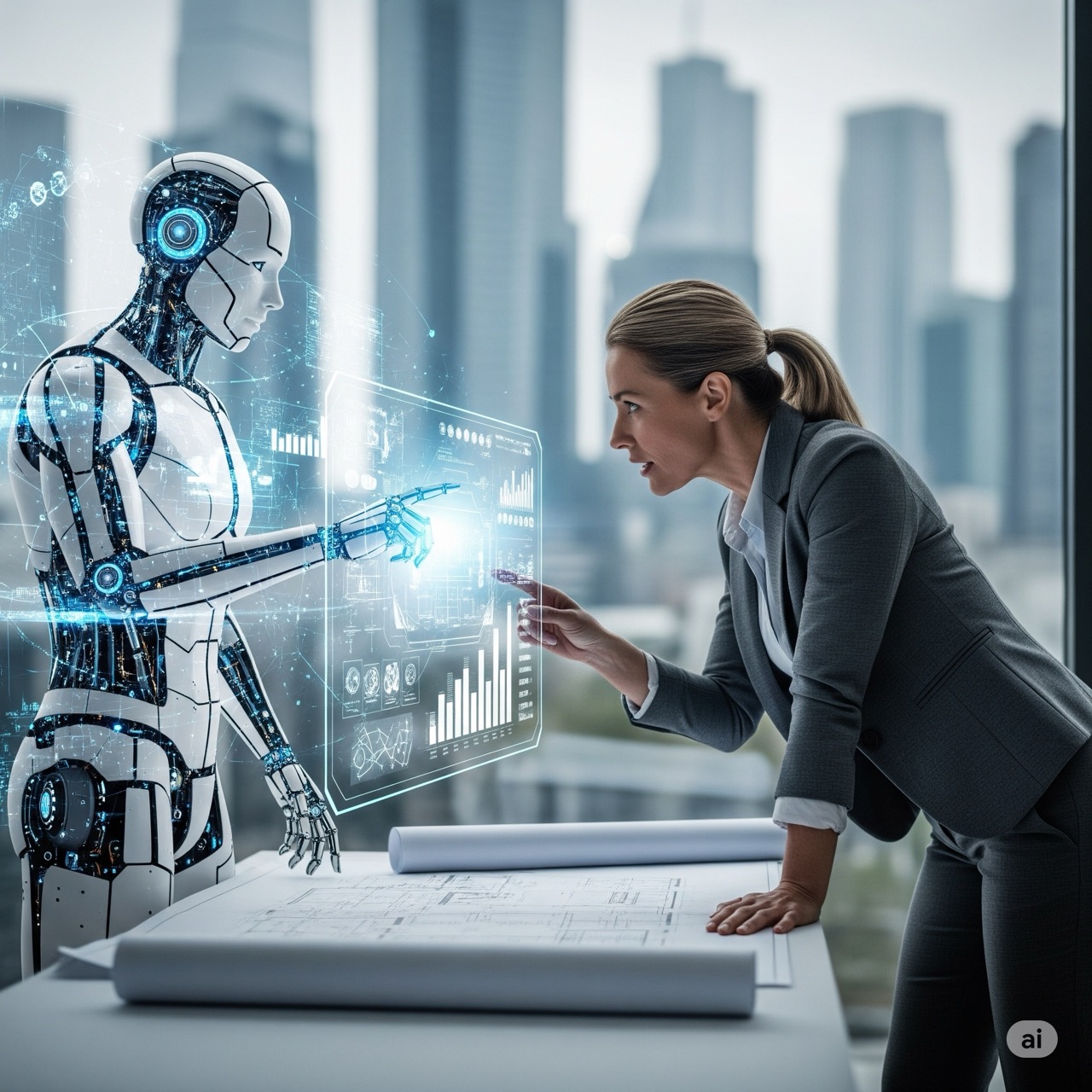
So, everyone's buzzing about AI, right? And honestly, I see two wild extremes: folks who think AI's gonna build everything by itself, and then the ones convinced it's totally useless. As a game developer, someone who's actually been in the trenches, I gotta tell you, both sides are missing the point. For me, AI in software development, in design, in anything creative, isn't some magical, self-sufficient builder. Nah, it's your incredibly sharp, super-smart assistant – think of it as your architect's right-hand person.
To really get what I mean, let's talk about building a house. Imagine you're a killer project manager. You know how houses go up – the foundations, the materials, how the plumbing talks to the electricity, all that jazz. You're not personally laying every brick, are you? No, you're guiding a crew. Now, this crew could be a bunch of seasoned pros, or, in our AI analogy, they could be like these "expert babies" – super good at one specific task. For us, those "expert babies" are the AI models, churning out code, as long as you give 'em the right instructions.
Just like that project manager needs to know what they're building, you – the human developer using AI – you still need a deep understanding of your software's backbone. All that syntax, the repetitive, grunt work of coding – that's what AI can handle for you. But the big picture? The concept, the strategy, figuring out what your software does and why you're building it that way? That's all you, buddy.
This is exactly why saying "AI can make you a developer" needs a serious reality check. It empowers individuals to become this super-efficient project manager, a "solution architect" if you will, who can run a whole squad of AI developers. You still need to know your programming ABCs – the logic, the flow, the core principles. As a game dev, I've lived this for years, just with human programmers instead of AI. Our game designers have this crystal-clear vision in their heads. They get it out – sketches, design docs – and the programmers turn that vision into actual, playable code. AI just makes that translation process lightning fast and way more versatile.
Here's the kicker: AI doesn't replace your fundamental understanding of design, just like a fancy calculator doesn't mean you can skip learning math. Instead, it boosts your human superpowers, letting you think bigger, solve more complex problems, and focus on the really creative, strategic stuff.
What's Buzzing Now: AI, Automation, and My Biggest Takeaways
Beyond all the talk about AI's role, this world is flying. Here are the hot topics I've been thinking about, including those big questions everyone keeps asking about jobs and creativity.
On AI and Automation Taking Our Jobs
Look, this is probably the biggest fear out there, and I get it. My take? No, AI isn't going to take all our jobs. But it will change a lot of them, and pretty fast. Repetitive, predictable tasks? Yeah, AI and automation are coming for those. That's actually a good thing because it frees us up for the more creative, strategic, and human-centric work. Your role might shift from doing the grunt work to managing the AI that does it.
On How AI Changes a Developer's Daily Life
For me, as a game dev, it's like having an insanely smart assistant who never sleeps. AI tools are already helping us write code faster, suggest functions, find bugs, and even generate design concepts. This isn't just about speed; it's about freeing up mental space for the game's core mechanics and the big architectural decisions. AI can also automate testing, ensuring higher quality, and even help with project management.
On AI, Creativity, and Ownership
Is AI-generated content truly "creative"? My take: AI isn't "creative" in the human sense. It doesn't have emotions or life experiences. It generates content based on patterns it learned from human-created data. It's a phenomenal tool for augmenting human creativity. As for ownership, that's a legal minefield, but generally, if an AI is used as a tool, the human is the creator. The AI is the brush, not the painter.
On Trusting AI When It Can Be Biased
This is a totally valid and crucial question. AI models learn from data, and if that data reflects existing biases, the AI will perpetuate them. That's why human oversight is non-negotiable. We need to carefully check the data we feed AI and push for Explainable AI (XAI) systems that can tell us how they reached a conclusion. The danger of AI isn't that it's "evil," but that it can amplify human flaws if not carefully managed.
The Power Duo: AI and Automation
This brings me to something I've been thinking a lot about: the true power of AI combined with automation. There are so many small, meaningless, but time-consuming tasks that we as humans don't want to do. Now, AI models can handle the data oversight that old automation systems couldn't, which changes everything. When we use some of the best automation tools and put them together with AI, we can build better, longer, and more robust automations.
Let me give you a quick example from my own life. Say I just finished an important phone call with a client. I can record my voice memo of the call's highlights. Then, AI can take that recording, transcribe it, summarize it, and pull out the bullet points. Once that's done, traditional automation can kick in to upload that perfectly prepared summary directly into the CRM. That's practical automation, powered by AI, handling those little tasks we hate.
My Core Belief: Learn These Tools, or Risk Being Left Behind
My absolute biggest point is this: it's not about AI taking our jobs; it's about people who use and know how to use AI taking our jobs.
How to keep your job ? Think back 20 years ago: people who knew how to use computers effectively were simply more efficient. Go back even further, 100 years ago: people who were literate, who knew how to read and write, stepped into "smarter" jobs.
Today, it's strikingly similar. The most important thing we can do is to actively try to learn these new AI tools. Not just understand them conceptually, but actually get our hands dirty. That direct experience is what really matters.
So, while AI gets smarter and more autonomous, the responsibility for its outputs increasingly falls on us – the humans guiding it. This requires not just technical proficiency but also a strong ethical compass.
We're not being replaced; we're leveling up. And honestly, for those of us who embrace it and learn to master these new capabilities, the future of creation and problem-solving looks pretty damn exciting.